

.avif)
Public Transport Terminal
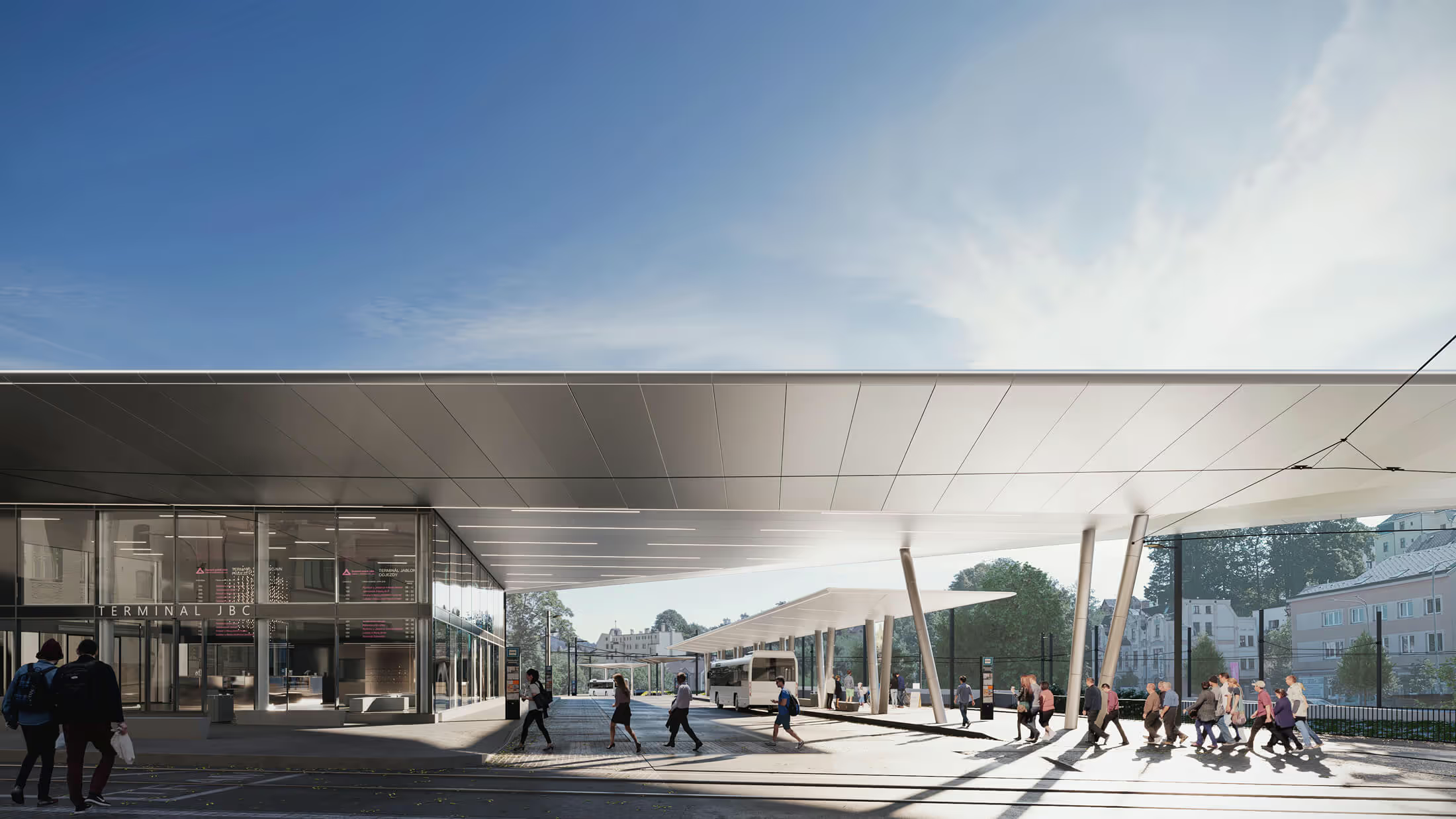
The new terminal serves as a gateway to the city. Its form is inspired by the delicacy and clarity of Jablonec glass. It plays with reflection, shimmer, and the blending of city and nature. In contrast to the surrounding built environment, the terminal is bold, light, and dynamic. Its expression is derived from glass and reflection, constantly changing with the time of day, weather, and rhythm of movement. A large floating roof hovers above the structure, acting as an urban mirror and a clear architectural landmark.
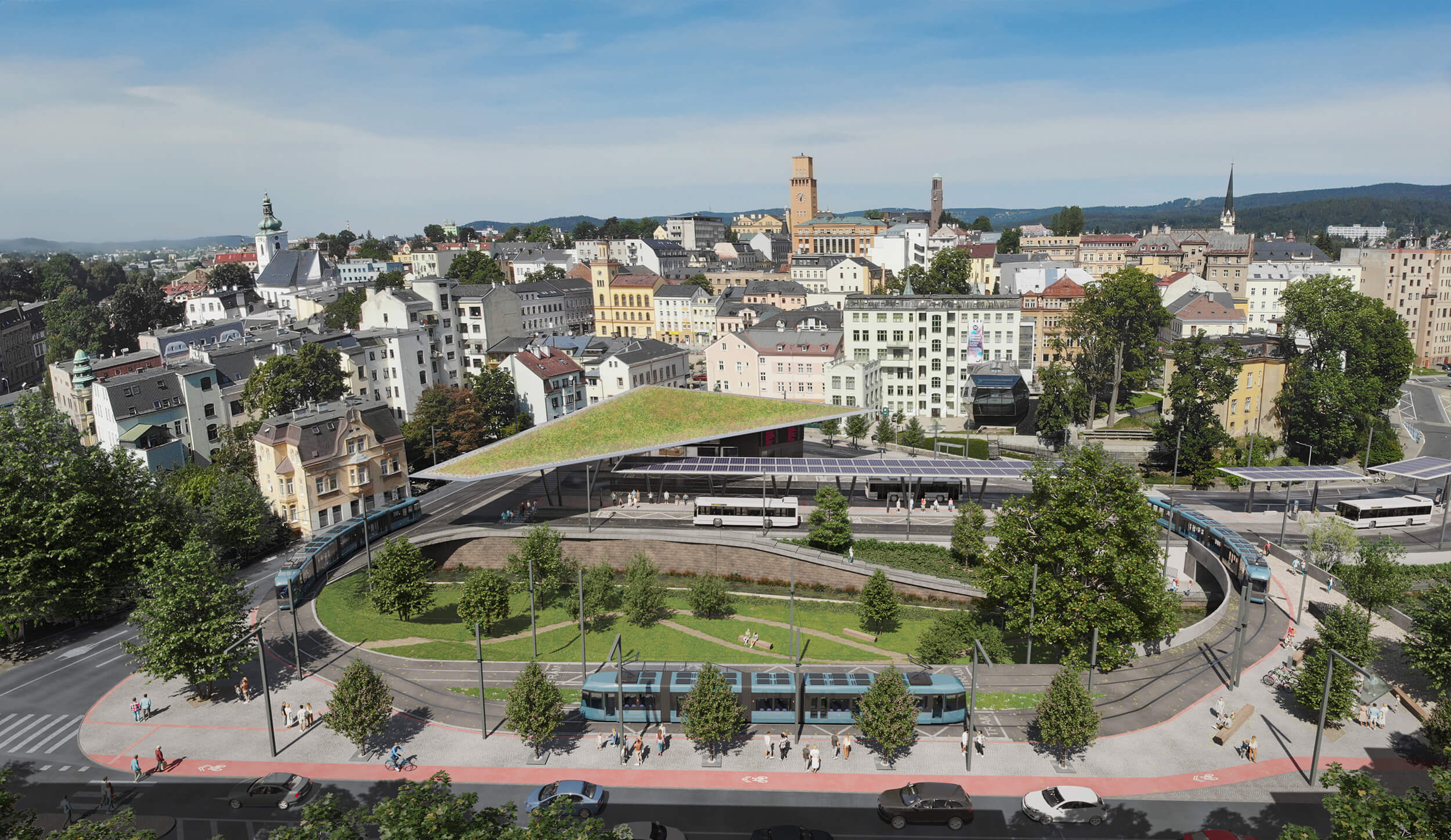

Jablonec nad Nisou is a city of glass, light, and nature. Here, the sparkle of jewelry reflects the nearby river, and the shimmer of glass façades echoes the horizon of the Jizera Mountains. The new terminal is not just a transport hub, but a true entrance to the city. It draws on the transparency of glass, the qualities of reflection, and the idea of integrating architecture with nature.
The site is irregular and complex, bordered by Kamenná Street, Lipanská Street, and 5. května Avenue. The valley of the Lusatian Nisa river introduces dramatic elevation changes, and the nearby Museum of Glass and Jewelry adds another important contextual layer. The design is based on abstract geometry inspired by suprematism. Irregular trapezoids and linear rectangles complete missing street lines, introduce order, and respond sensitively to the urban fabric. The river remains visible throughout the area and is actively incorporated into the design. A linear park along 5. května Avenue forms part of a green corridor that follows the river’s path. Together with the new terminal, it creates a natural counterpoint to the transport infrastructure.
The terminal itself contrasts with its surroundings. It is bold, lightweight, and ever-changing. Its expression comes from the interplay of glass and reflection, responding to time, weather, and movement. The façade is fully glazed, linking interior and exterior. Above the structure floats a large roof, vegetated on top and reflective underneath. Its line is accentuated by integrated lighting. The green roof returns nature to the urban context, while its underside becomes a visible symbol of the place.
The interior features a two-story hall with generous open space. Thanks to the expansive glazing, passengers have direct visual access to arriving and departing transport. The hall draws on the city’s glassmaking and jewelry heritage. White columns, black glass displays, and dark ceilings are complemented by a play of light and reflection. Irregular lighting lines cross the space like flows of traffic converging in the terminal. At the center of the hall, a suspended sculptural object acts as a luminous piece of urban jewelry, linking local tradition with a contemporary vision of public space.
The terminal has three levels. The underground level includes public sanitary facilities for both travelers and the general public. The ground floor is equipped with urban furniture, including shelters, benches, bike racks, and trash bins - small but essential elements that contribute to the comfort and functionality of the space.
This new terminal is not just a point of arrival and departure. It is a place where urban energy meets the calm of the river, where architecture and landscape coexist, and where the tradition of glass is reimagined in the present. It becomes a new urban landmark for Jablonec - delicate yet strong, reflective yet transparent, poetic yet practical.
The terminal is also the new terminus of the tram line between Liberec and Jablonec, with seamless transfers to local and long-distance buses. The total investment cost is approximately 600 million CZK.

